Learning from their errors: How to partner with an indigenous community and avoid cultural appropriation.
French fashion brand Sézane Paris was shooting an ad campaign in Oaxaca, Mexico, when they encouraged an elderly Zapotec woman to dance for them. Video footage of the photo shoot has now sparked widespread outrage and marks the latest chapter in a longstanding debate around cultural appropriation and racism in the fashion industry. In a time where being socially responsible has become more of a trend than anything else, founder of Koua Studio Erika Alvarez speaks on cultural appropriation and her partnerships with indigenous communities.
The first thing Erika points out is that the exploitation of indigenous Mexican communities is not something that starts with Sézane. She explains that a few years ago, Isabel Marant plagiarised a Mixe indigenous community for one of her collections. Years later, Anthropologie did the same with a pair of embroidered shorts. Zimmerman was also accused of copying the embroidery from Huautla de Jiménez, Oaxaca for its 2021 Resort collection.
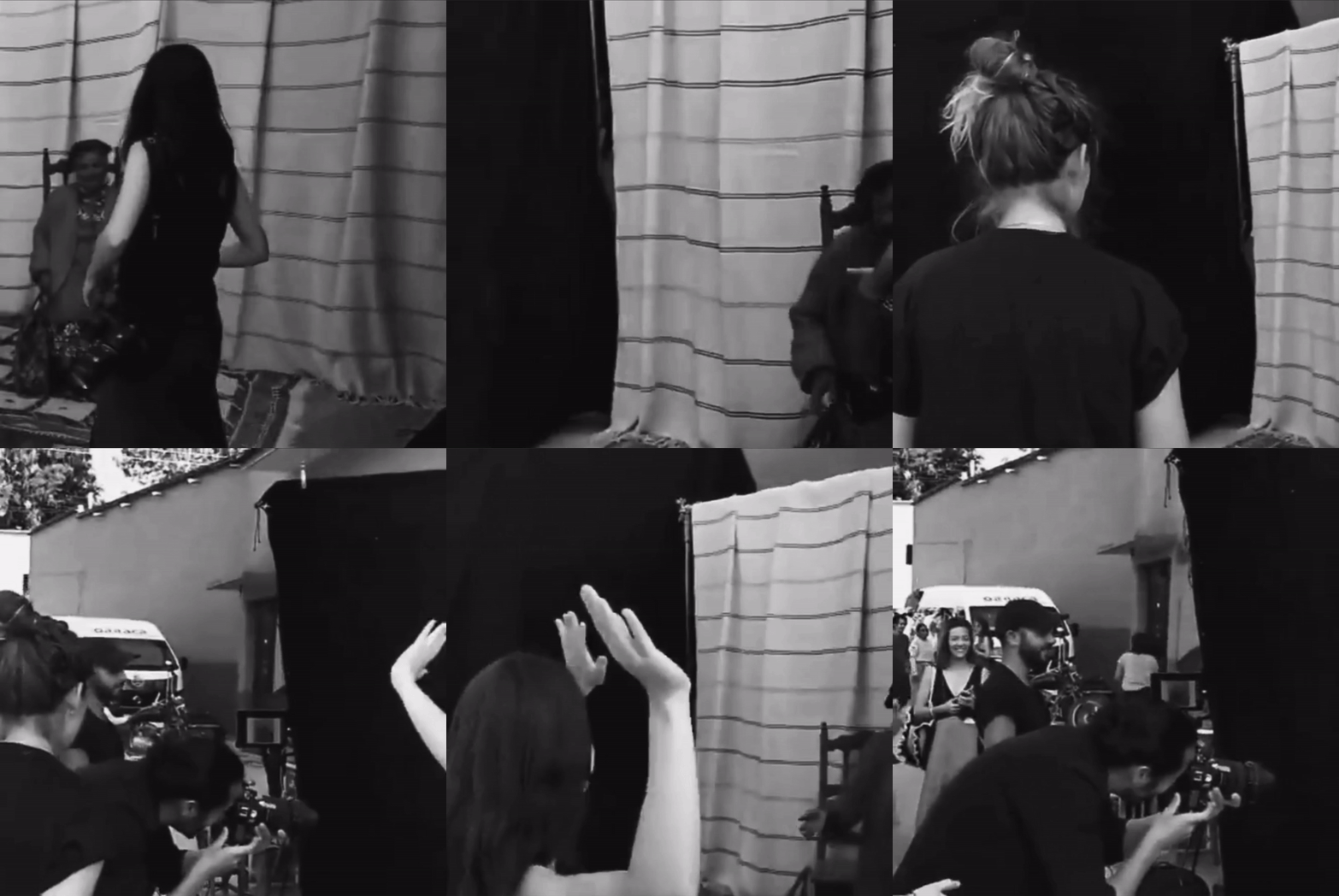
“I think is enough, it is time to teach designers how to do it in the right way. They threaten the dignity of our people and reinforce the discrimination and marginalisation they’ve experienced for years. We will no longer tolerate the cultural appropriation of local designs without due credit. Sézane is a clear example on how not to do it”.
Other than doing proper research into these communities, Erika suggests some measures to be taken when forming a partnership with indigenous peoples.
Collaborate by buying the community’s textiles for a collection. Pay a fair price that considers their hours of labour and the materials, historical value and skills involved.
Hand over a percentage of the sales profits - as you would in a partnership with any other artist.
Give credit to the artisans who made the pieces. Tell the story behind your collection and form an actual connection with the communities you collaborate with.
'It's crucial to consider that they not only portray a simply design, they portray the way to see and to understand the world which is defined as their ‘Cosmovision’ and this has a huge value and it should be treated with respect'.
Koua Studio.
Indigenous communities have a history and rural traditions which attracts attention from visitors around the world. We need to set a collective culture that serves as a barrier of opportunists behaviours. Big brands which on the search for exclusive natural resources for their collections, attempt establish direct relations with artisans from local towns, exploiting the bargaining power connected with their brand strength. This is one of the reasons our company Koua Studio exists. This could be reduced if we act in pursuit of collective goals and maintain those boundaries which are indispensable to protect the cultural heritage, cosmovision and exclusiveness of a supply chain.
At KOUA-STUDIO we currently work with over 150 skilled female artisans across different local communities in Mexico to develop our 4 lines of textiles. We aim to help designers to collaborate with our communities in the right way. For more information please contact us at sales@kouastudio.com